Mon, 15 Jun 2026 1:00 PM - 2:00 PM
We are hosting an additional seminar in the C2D3 Computational Biology Seminar Series for the academic year 2025-2026! Everyone welcome.
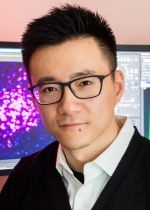
Speaker: Professor Yinqing Li
Affiliations: The IDG/McGovern Institute for Brain Research, Tsinghua University
Gurdon Institute, University of Cambridge (Sabbatical Visitor)
Hosted by: Qiuyu, Lian, Gurdon Institute & DAMTP
Talk title: Control of Gene Expression in Time and Degree
Abstract: Cells need to control gene expression along two axes at once: their expression must change at an appropriate pace as cells progress or adapt, and particular genes must be kept within functional ranges rather than driven fully on or off. How are these two, the pace of change and the level it reaches, coordinated during tissue formation, adaptation, and maintenance? In this talk, I will discuss work suggesting the two may be connected, through transcription factors enriched in intrinsically disordered regions (IDRs) and the dynamic condensates they can form.
I will begin in the developing brain, where we identified transcription factors that act in global temporal regulation. These factors set the pace of neural progenitor transitions: slowing the program expands lineage progression to produce more neurons and a larger neocortex, whereas accelerating it compresses progression, pointing to a conserved mechanism that balances evolutionary robustness with species-specific adaptation. The IDR enrichment of these factors led us to ask what these regions do at the molecular scale. I will discuss evidence that IDR-containing factors form condensates exerting both activating and repressing control over their targets, buffering expression to a set level rather than driving genes fully on or off.
Extending this to faster-renewing systems, where cells continually shift between proliferation and differentiation and adopt new fates, I will discuss how the properties of condensates may relate to both the timing and the level of gene expression changes that shape these transitions. I will close by briefly touching on an emerging model in which changes in condensate properties accompany increased transcriptional noise and functional decline in aging tissues.
Biography: Yinqing Li is a tenured Associate Professor in the School of Pharmaceutical Sciences and a principal investigator at the IDG/McGovern Institute for Brain Research at Tsinghua University. His training spans microelectronics (B.S., Fudan University, 2008), electrical engineering and computer science (S.M./Ph.D., MIT, 2012/2016), and neuroscience (postdoctoral fellowship, the Broad Institute of MIT and Harvard and the Stanley Center for Psychiatric Research, 2016–2018), and he applies quantitative principles across experimental genomics and neurobiology. His lab builds technologies to both read and rewrite gene regulation, addressing fundamental questions in ageing, degeneration, development, and regeneration.