Events 32 x 13.1 ( with space) ppt.png

Events and Talks


In AI, Machine Learning and Data Science across the University and beyond.

Events

C2D3 event Talk In person

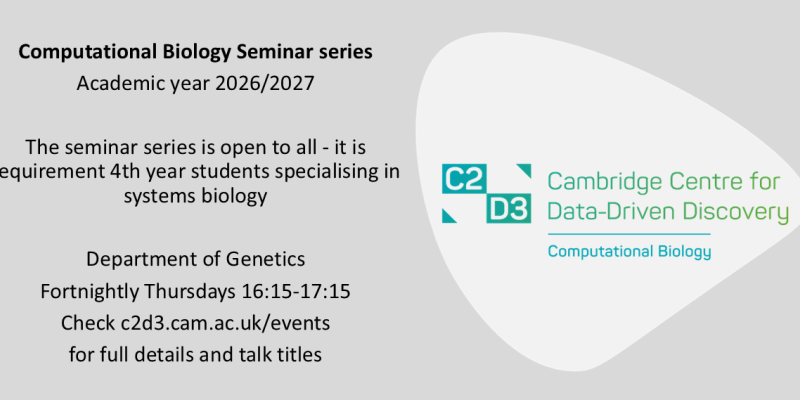
Computational Biology: Seminar Series

8 Oct 2026 - 18 Mar 2027

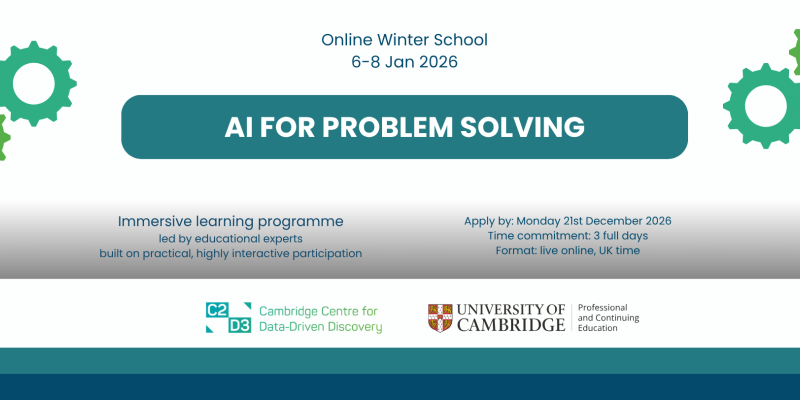
6 Jan 2027 - 8 Jan 2027

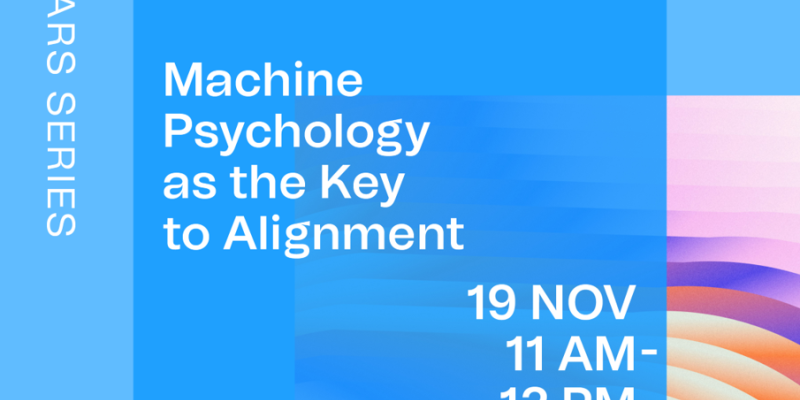
19 Nov 2026

Uni of Cambridge Conference Hybrid

AI for Science Summit 2026

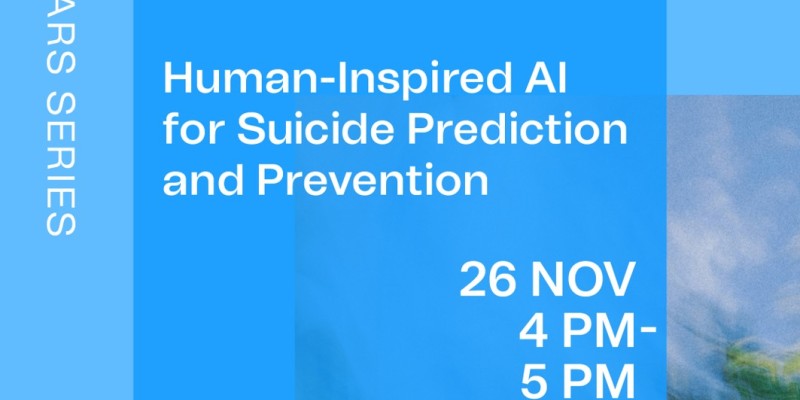
24 Nov 2026

9 Dec 2026 - 10 Dec 2026

11 Jan 2027 - 15 Jan 2027

External Conference In person

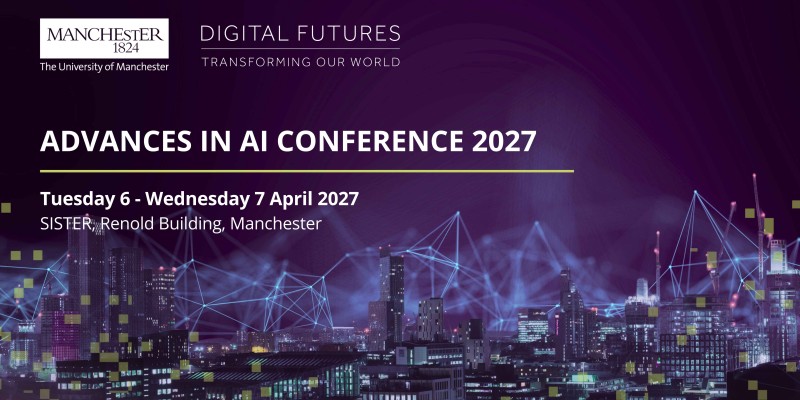
Advances in AI Conference 2027

6 Apr 2027 - 7 Apr 2027

AI Cafe at CMS. Uni of Cambridge
AI workshop series: Hands On AI workshop Uni of Cambridge
AI workshop series: LLMs Hands On workshop Uni of Cambridge
AI workshop series: AI and Large Language Models Uni of Cambridge
AI for Bibliographical Record Creation: Hopes and Anxieties Uni of Cambridge
AI workshop series: Generative AI Uni of Cambridge
The AI Patent Revolution: Accelerating Entrepreneurs : Member's event External
AI for Researchers: A Beginners’ Guide Uni of Cambridge
Cambridge Enterprise: Consultancy 101 Uni of Cambridge
Cambridge Enterprise: Research Tools 101 Uni of Cambridge
AI Café: AI and Education Uni of Cambridge
Good Practices for Reproducible Open Source Code Uni of Cambridge
Accelerate Programme for Scientific Discovery – Lent Term workshops in AI for… Uni of Cambridge
Accelerate Programme for Scientific Discovery – Lent Term workshops in AI for…
AI and Education Initiative Launch- Introductory Session Uni of Cambridge
Centre for Human-Inspired AI (CHIA): Early Career Conference 2025 Uni of Cambridge
First Steps in Coding with R Uni of Cambridge
Cambridge Social Data School Q&A Uni of Cambridge
CDH Open: Digital Editing in the Age of AI | Dr James Cummings
Prof. Max Kleiman-Weiner: Computational morality
Women in Robotics
Accelerate Programme AI for Science lunchtime seminar Uni of Cambridge
Large Language Models in Practice: A Hands-On Journey from Data Collection to Insight Discovery Uni of Cambridge
Accelerate Programme for Scientific Discovery – Michaelmas Term workshops in AI for Science Uni of Cambridge
Synthetic Biology UK 2024 Uni of Cambridge
Validation data: strategies to avoid overuse (Invitation only workshop) C2D3 event
AI for Science Summit, University of Cambridge Uni of Cambridge
AI and Science: An opportunity to strengthen the African scientific landscape Uni of Cambridge
Communicating Mathematical and Data Sciences – What does Success Look Like? External
How can we make public health more precise? Uni of Cambridge
Illuminating mechanisms of mammalian morphogenesis Uni of Cambridge
Ideas to Reality Programme Uni of Cambridge
Generative models as efficient surrogates for molecular dynamics simulations Uni of Cambridge
IE Expo Uni of Cambridge
Cambridge MedAI Seminar Series Uni of Cambridge
Digital Twins of Patients on Non-Invasive Respiratory Support Uni of Cambridge
Continuous Diffusion for Mixed-Type Tabular Data Uni of Cambridge
Domain-theoretic Semantics for Dynamical Systems: From Analog Computers to Neural Networks Uni of Cambridge
The next frontier in causal machine learning Uni of Cambridge
Computational Microbiology of the E. coli cell envelope Uni of Cambridge
AI and Mental health Uni of Cambridge
Founders at the University of Cambridge - Introducing Start 2.0 Uni of Cambridge
Cell state switches and local adaptation in cancer: insights from AI and ecology-inspired approaches Uni of Cambridge
When tech policy becomes foreign policy: the future global governance of AI – Trust Conference 2024 Uni of Cambridge
Functional genomic screens and AI: a key partnership for successful therapeutic development External
Cambridge Infectious Diseases ECR event: Exploring Career Pathways Uni of Cambridge
Somatic evolution of the adaptive immune system in health and disease Uni of Cambridge
CHIA Early Career Community Welcome Event Uni of Cambridge
ARIA Roadshow in Cambridge External
Efficient protein flow models with optimal transport flow matching Uni of Cambridge

Talks

Upcoming related talks from talks@cam

Date Title Speaker Abstract
Variation is the Norm: Embracing Sociolinguistics in NLP Anne-Marie Lutgen (University of Luxembourg)

In Natural Language Processing (NLP), variation is typically seen as noise and "normalised away'' before processing, even though it is an integral part of language. Conversely, studying language variation in social contexts is central to sociolinguistics. I will present a framework to combine the sociolinguistic dimension of language with the technical dimension of NLP. I argue that by embracing sociolinguistics, variation can actively be included in a research setup, in turn informing the NLP side.

MRC Biostatistics Unit seminar Pawel Morzywolek, University of Copenhagen

Inference on Variable Importance for Treatment Effect Heterogeneity: Shapley Values and Beyond


How Do Language Models Reason? Foundations, Limitations and Neuro-Symbolic Approaches André Freitas (Idiap Research Institute & University of Manchester)

How do language models reason, and what would it take to build AI systems capable of sustained, complex reasoning? This lecture develops the foundations for answering these questions, connecting what we know about the internal workings of language models with methods for evaluating and extending their capabilities.


Optimising Julia code on GPUs: Case studies from ocean and atmosphere modelling Mikolaj Kowalski, Jack Franklin, David Kamm - RSEs, ICCS, University of Cambridge

Julia is a just-in-time (JIT) compiled language with a strong focus on scientific computing and performance. It has gained significant popularity in the climate science community, largely due to its flexibility and excellent native support for GPU computing. Over the last year, our team at the Institute for Computing for Climate Science (ICCS) has collaborated closely with the developers of major Julia-based ocean and atmosphere models to optimize their performance on GPU architectures.

Optiver.com


ALPS: An Efficient Request Scheduler for LLM Inference Dr Chen Chen, Nottingham Trent University

Abstract:

Computational Biology Seminar Series - Dr Benjamin Schuster-Boeckler Dr Benjamin Schuster-Boeckler, Ludwig Institute for Cancer Research, University of Oxford​

Talk title: The Exposome: how life leaves a trail of mutations in our genomes


Hosted by: Michael Boemo​


https://www.c2d3.cam.ac.uk/events/computational-biology-seminar-series-2026-27

Aligning LLMs to the Human Brain Mariya Toneva (Max Planck Institute for Software Systems)


The AI Exponential: Scientific Discovery, Engineering Simulation, and the New Student Space Race

Professor Bishop will discuss the rapid advancement of artificial intelligence and its transformative impact across fields including software engineering, weather forecasting, mathematics, scientific discovery, and engineering simulation. The lecture will also highlight an ambitious student rocketry project being undertaken within the Department.


Title to be confirmed Bálint Gyevnár (CMU)


Amazon.com Amazon.com


Scaling Analytical Benchmarks to Production Complexity   Jan Vincent Szlang, University of Cambridge

Abstract:

Red teaming frontier AI at the UK AI Security Institute M. Pawan Kumar (AI Security Institute)

Abstract: The UK’s AI Security Institute (AISI), situated within the Cabinet Office, works to equip government with an evidenced understanding of the risks posed by advanced AI. AISI's Red Team stress-tests frontier safety measures: finding ways misuse safeguards can fail, investigating unintended and harmful model behaviours, and assessing whether protocols intended to keep models under control actually work.


Statistics Clinic Michaelmas 2026 IV

This free event is open only to members of the University of Cambridge (and affiliated institutes). Please be aware that we are unable to offer consultations outside clinic hours.


Validity by Design for LLM "Reasoning" Rachel Lawrence (Microsoft Research Cambridge)


QBS - Dr Alexis Barr Dr Alexis Barr, Imperial College London

Title: Discovery research for better cell cycle targeting in cancer


How Prolific is accelerating frontier research: complex human-subjects studies built on a foundation of data quality Dr Simon Jones (Prolific)


Abstract

Title to be confirmed Simon Ostermann (German Research Centre for Artificial Intelligence)


[Rescheduled] Title to be confirmed Prof Jon Crowcroft, University of Cambridge

N/A

Cambridge AI in Medicine Seminar - December 2026 Shivani Sinha

Sign up on Eventbrite: details coming soon